

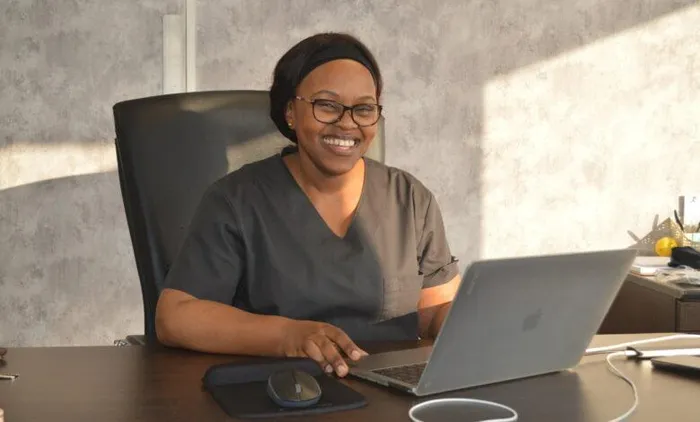
Dr Sindiswa Ntloko, a leading vascular surgeon, emphasises early intervention to save limbs and improve patient outcomes with amputations.
Image: Supplied
Amputation has become a significant health concern in South Africa, with rising cases mostly driven by complications from chronic and lifestyle-related diseases.
Vascular surgeon, Dr Sindiswa Ntloko based at the Ethekwini Lenmed Hospital and Heart Centre said that early intervention and knowledge are imperative in order to reduce the risk of limb loss.
One of only a few female vascular surgeons in KwaZulu-Natal she deals with blood vessels from the head to the toe, excluding the brain and heart.
Her work involves creating vascular access for dialysis in those with kidney failure and treating patients who have suffered strokes and those who battle with varicose veins.
Ntloko was driven to pursue a limb preservation fellowship in Canada after seeing a number of patients lose their limbs because they sought medical help too late.
Her fascination with medicine stemmed from her grandmother who was a nurse and Ntloko went on to pursue her dream of becoming a doctor at the Nelson R Mandela School of Clinical Medicine (UKZN), graduating MBChB.
Her focus is salvaging limbs to avoid amputation, which Ntloko believes has often been the “go-to procedure” for many patients, especially in rural communities.
“In South Africa lower limb amputations are more prevalent than upper limb procedures,” she said.
A study conducted by Dr Katleho Limakatso, who was an honorary senior lecturer in the University of Cape Town’s (UCT) Department of Anaesthesia and Perioperative Medicine, found that lower limb amputations at Groote Schuur Hospital – one of the biggest tertiary academic hospitals in the country – had increased rapidly.
The study of the 107 participants – both men and women, presented with a long list of comorbidities.
The common comorbidity among all of them was diabetes mellitus II.
80.25% of patients surveyed were living with diabetes and 69.14% of them reported to suffer from hypertension. Further, 55% of patients reported a history of smoking.
Ntloko said complications from poorly controlled Type II diabetes, including foot sepsis and restricted blood flow, are the leading cause of non-traumatic amputations.
“When it comes to vascular diseases conditions like atherosclerosis – a disease of the arteries - and peripheral vascular disease are major contributors to lower limb amputations.”
“Lifestyle factors like smoking and hypertension are also strongly associated with higher amputation risk.”
She said the South African healthcare system faces various barriers to providing comprehensive care for amputees.
“Rural areas often lack specialised prosthetic services and rehabilitation staff, leading to long travel distances and wait times for patients.”
Ntloko said the exorbitant costs of prosthetics made them unaffordable for many patients.
“Low health literacy often results in patients seeking medical help only when complications are advanced, which increases the likelihood of amputation,” she said.
The UCT study also found that low literacy levels automatically mean “low health literacy levels because patients don’t understand their health conditions, they can’t read up for more information or don’t really understand what they are reading”.
“They also lack the knowledge on how to lead a healthy lifestyle, eat a balanced diet and to access proper healthcare.”
According to the study this underscored the need to offer them various education and empowerment programmes to equip patients with the knowledge they need to improve their health literacy and ultimately reduce the burden of amputations.
Dr Ntloko’s rooms may be reached on 031 581 2493 at the Lenmed Ethekwini Hospital and Heart Centre and she specialises in Vascular Access; Varicose Veins; Venous Disorders; Diabetic Foot among other issues affecting the arteries, veins, and lymphatic system.