

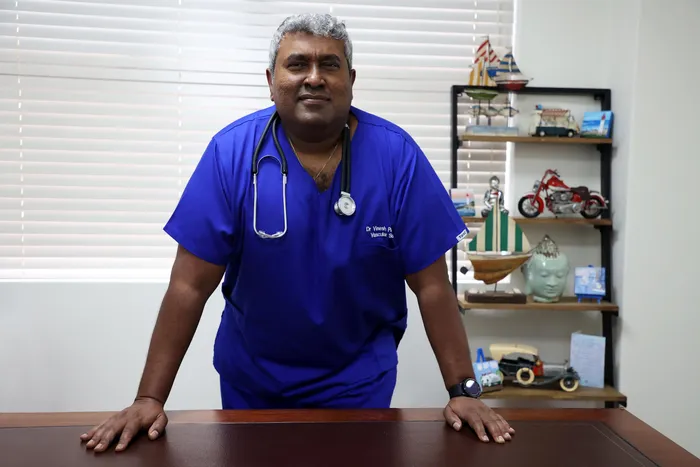
Renowned vascular surgeon Dr Padayachy sheds light on the critical shortage of organ donors and offers essential lifestyle tips to combat this silent killer.
Image: Supplied
March marks Kidney Awareness Month, a period dedicated to shining a light on a "silent killer" that currently affects an estimated 6% to 10% of the South African population.
“As a vascular surgeon, I often see the devastating final stages of this disease, where the only options remaining are lifelong dialysis or the hope of a life-saving transplant,” said leading Vascular Surgeon based at Durban’s Lenmed Ethekwini Hospital and Heart Centre in Durban.
In South Africa, we are facing a critical healthcare crisis as the gap between kidney failure patients and available transplants reaches an all-time high.
Our nation grapples with a unique intersection of health challenges.
While global trends show rising rates of kidney disease, South Africa’s prevalence is heavily driven by non-communicable diseases.
Hypertension is present in more than half of our kidney patients, followed closely by diabetes. Furthermore, South Africa has a significant burden of HIV-associated nephropathy, which frequently leads to end-stage renal disease.
“The shift towards a Westernised diet—high in salt, sugar, and processed foods—combined with sedentary lifestyles, has made our population increasingly susceptible to chronic kidney disease (CKD),” Padayachy added.
Perhaps the most sobering reality of kidney health in South Africa is the transplant shortage.
Approximately 6,500 patients are currently on waiting lists for organ and tissue transplants, with kidneys being the most in-demand organ. Despite this desperate need, fewer than 300 organ transplants are performed annually in the country.
“Our deceased organ donor rate is among the lowest in the world, at roughly 1.4 per million people, compared to over 47 per million in leading countries like Spain. Only about 0.2% of South Africans are registered as organ donors. This shortage places immense pressure on our dialysis systems, which are already at a breaking point, particularly in the public sector where care must often be rationed,” Padayachy revealed.
According to him these are the symptoms to watch out for:
Prevention remains the most effective tool we have. Simple lifestyle adjustments can significantly reduce your risk:
Monitor "The Big Two": Regularly check and control your blood pressure and blood sugar. These are the primary causes of kidney failure in South Africa.
Reduce Salt Intake: Aim for no more than one teaspoon (5-6g) of salt per day to protect your blood vessels.
Stay Active: At least 30 minutes of moderate exercise, such as brisk walking, five days a week.
Stop Smoking: Smoking narrows blood vessels and reduces vital blood flow to the kidneys.
“Use Medication Wisely: Chronic use of over-the-counter painkillers like ibuprofen can cause significant kidney damage over time,” he said.
“If you are at high risk due to diabetes, hypertension, or a family history of kidney disease, I urge you to request a simple blood (eGFR) and urine test from your doctor annually. Early detection allows us to implement treatments that can slow or even stop the progression of the disease.
“Lastly, consider the gift of life. One organ donor can save up to seven lives. I encourage every South African to discuss organ donation with their families and register through the Organ Donor Foundation,” he said.
“As a vascular surgeon, I often see the devastating final stages of this disease, where the only options remaining are lifelong dialysis or the hope of a life-saving transplant,” said Dr Padayachy.
A critical part of dialysis care is ensuring reliable vascular access.
Dr Padayachy specialises in creating and maintaining access such as AV fistulas and permanent catheters, as well as restoring function when these become blocked or infected, helping patients continue life-sustaining treatment with fewer interruptions.
Dr Vinesh Padayachy’s rooms may be reached on 031 581 2493 at Durban’s Lenmed EThekwini Hospital and Heart Centre.