

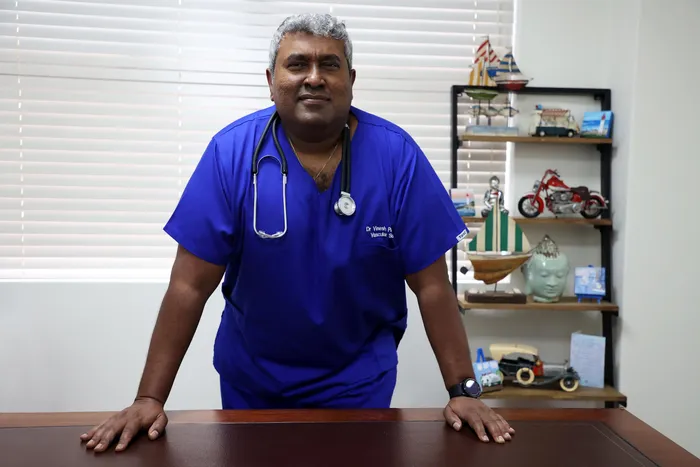
South Africa's innovative diabetes dashboard is set to revolutionise patient care and combat the country's diabetes crisis with real-time data.
Image: Supplied
As South Africa grapples with a burgeoning diabetes crisis, medical experts are hailing the launch of the country’s new national diabetes dashboard as a revolutionary step toward reducing the devastating complications of the disease.
For the first time, South Africa has a near-real-time, nationwide view of diabetes control, with laboratory data refreshed within 48 hours.
Private Health has lauded the innovation as a step in the right direction in managing the disease that impacts more than 4 million South Africans.
Until now, diabetes data management has been largely reactive for most South Africans and was largely dependent on monthly Excel reports that required manual analysis and delayed distribution.
By the time a patient was flagged for poor control, the opportunity for early intervention had often passed.
But now by leveraging National Health Laboratory Service (NHLS ) laboratory data to provide a live view of diabetes control, it allows us to transition from reactive care to proactive population health management.
Clinicians and programme managers can now identify high-risk patients earlier, monitor trends across districts and provinces, and intervene rapidly to prevent long-term complications
Among those leading the call for data-driven intervention is Dr Vinesh Padayachy, a prominent Durban-based vascular surgeon and founding member of the South African Lymphatic and Venous Society (SALVS).
Diabetes is currently the leading natural cause of death among South African women and the second highest cause for the population as a whole. The high rate of undiagnosed cases creates a massive hidden health crisis across the country
Approximately one in nine adults is living with the condition, and up to 45% of these individuals remain undiagnosed, meaning many only discover it when organ damage has already occurred.
The Dashboard therefore offers a centralised tool to track patient outcomes and healthcare performance across the country.
For specialists like Dr. Padayachy, who often sees the "end-stage" consequences of unmanaged blood sugar, this tool is more than just a digital map—it is a lifeline.
Dr. Padayachy, who practices at the Lenmed eThekwini Hospital and Heart Centre, witnesses daily the high price of late diagnosis.
"Diabetic foot disease is responsible for a siginifcant number of all non-traumatic amputations in South Africa," warns Dr. Padayachy.
"The tragedy is that many of these amputations are preventable through early intervention and consistent monitoring. By the time a patient reaches my operating theater for a revascularization procedure, we are fighting to save a limb that might never have been at risk if their glucose levels were better managed at the primary care level," he explains
it is estimated that up to 80.6% of people living with diabetes (diagnosed and undiagnosed) in South Africa have an unfulfilled foot care need, especially at the primary healthcare (PHC) level (Ntuli & Letswalo 2023)- this is the only sort of evidence-based article I could find that relates to diabetic foot
The new dashboard, developed to provide real-time insights into how diabetes is being managed in public and private clinics, addresses a critical "blind spot" in the South African health system. According to insights from Health-e News, the dashboard allows health officials to see exactly where resources are lacking and where patients are falling out of the system.
Dr Padayachy believes this transparency will fundamentally change how doctors approach preventative care. "In vascular health, awareness is a powerful catalyst for change," he says. "Having a national dashboard means we can identify 'hotspots' for complications like ulcers and kidney disease before they become catastrophic. It allows us to move from being reactive—treating the wound—to being proactive—managing the patient’s risk profile holistically".
The surgeon, known for performing endovascular limb salvaging procedures emphasises that diabetes management is about more than avoiding surgery; it is about preserving quality of life. High blood sugar doesn't just affect the feet; it impacts sexual health, kidney function, and mental well-being.
"We are entering an era of personalized medicine," Padayachy notes.
"Tools like the dashboard help us tailor lifestyle interventions, such as exercise and dietary adjustments, to the specific needs of our population. When we have the data, we can prove to patients that their efforts are working, which is a massive motivator".
"The dashboard is only as effective as our collective response," concludes Dr. Padayachy.
"For the medical community, it is a tool for accountability. For the public, it should be a signal to prioritize screenings. Don’t wait for a wound to appear; use the resources available to manage your health today".
Dr Padayachy's rooms may be reached on 031 581 2493 at the Lenmed eThekwini Hospital and Heart Centre and he specialises in Vascular Access; Varicose Veins; Venous Disorders; Diabetic Foot among other issues affecting the arteries, veins, and lymphatic system.