

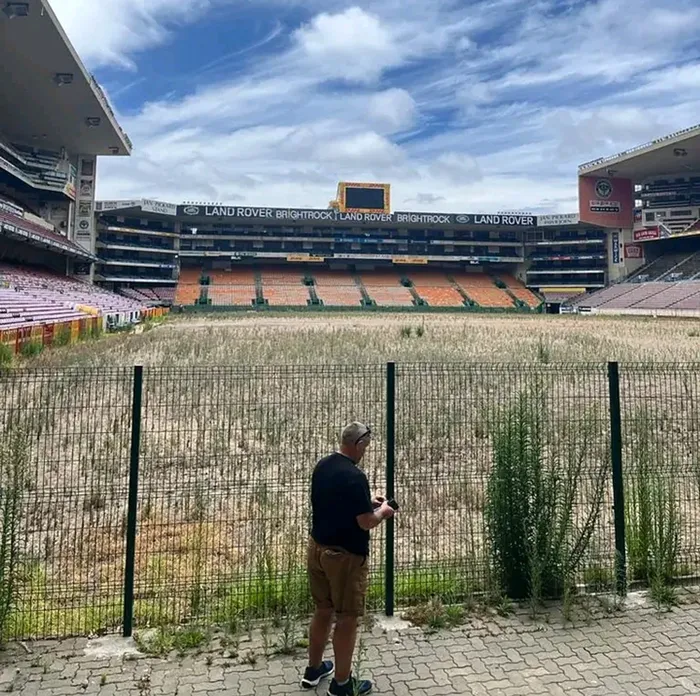
John Goliath asks why are people still yearning for Newlands when Cape Town Stadium offers a much better match-day experience.
Image: Supplied
One of my earliest and favourite rugby memories is being part of the 1995 Rugby World Cup opening ceremony at Newlands on a lovely winter’s day, 10 June.
There I was, a scrawny 13-year-old kid from Paarl, walking into the iconic "cathedral" of South African rugby carrying a Japanese flag, standing metres away from the great Nelson Mandela as he delivered his opening speech.
The last time I had seen so many people gather to hear Madiba speak was five years prior, when my parents took us to the Grand Parade in Cape Town following his release from prison.
On this occasion, however, Madiba wasn’t the sole attraction. The crowds had gathered to watch the Springboks launch their campaign against the Wallabies and to experience the first major international sporting event hosted by post-apartheid South Africa.
It was my first time at Newlands, and I was in awe of its size and stature. The atmosphere was electric, making it tough to concentrate on the choreography, even if the steps weren't overly complex.
We didn’t stay for the match, but you could feel the energy as the Springboks took the field; the very foundations of Newlands seemed to shake with excitement.
As an adult rugby fan, and later a rugby scribe for the Cape Times, I enjoyed many wonderful moments there, witnessing epic matches and covering my first Test match in 2016.
My final trip to Newlands was in 2019, to honour and say goodbye to the legendary Chester Williams, who passed away shortly before the World Cup in Japan. It was a surreal day; the familiar smell of boerewors rolls and samoosas and the roar of the fans were replaced by a sombre atmosphere of reflection.
Yet, while Newlands was a place of joy for many, it was also a symbol of segregation. Before Unity, Black and Coloured players and supporters were treated as second-class citizens — a painful memory that still lingers for the majority of Capetonians.
In time, the stadium also became an old relic, no longer fit to host major events. The match-day experience had become a genuine drag.
One of my biggest gripes is seeing people film the weeds and the dilapidated state of the old ground and moan. Jirre guys! Of course it looks like that — it is being sold because Stormers have moved on to a shiny new home!
Nostalgia for Newlands is understandable, but it is often viewed through a heavily distorted lens. We remember the triumphs, but we conveniently forget the crumbling concrete, obstructed views, claustrophobic concourses, and the logistical nightmare of navigating a residential suburb.
Newlands was a 20th-century stadium built for an era of rugby that no longer exists.
The move to the Atlantic Seaboard and the DHL Stadium was inevitable — a modern facility offering the amenities that the 21st-century sports fan craves. From the ease of the Fan Walk to hospitality standards that actually meet modern expectations, this wasn’t just a change of scenery; it was a necessary evolution for the survival of the franchise.
This resistance to change extends beyond architecture and into the very identity of the team. A vocal segment of the fan base remains upset that Western Province will now play in the Currie Cup as the Stormers, finally joining the Bulls, Sharks and Lions in aligning their rugby brand.
The reality is that Western Province is the heritage and remains the bedrock of the amateur game, but the Stormers brand is the future.
In the modern rugby landscape, brand identity matters. The Stormers represent a vibrant, diverse, and high-octane brand that captures the imagination of a much broader demographic than the old "Province" ever did.
The last time Western Province played a Currie Cup match, fewer than 5,000 people attended. For the last Stormers match, nearly 50,000 rocked up. While they are different competitions, it all comes down to brand identity and alignment and to streamline the fan base in supporting one entity.
Cape Town, it’s okay to miss the past, but it is fatal to live in it. It’s time to pack away the vintage 1990s jerseys, stop complaining about not being able to braai outside DHL Stadium, and fully commit to the new Stormers era.