

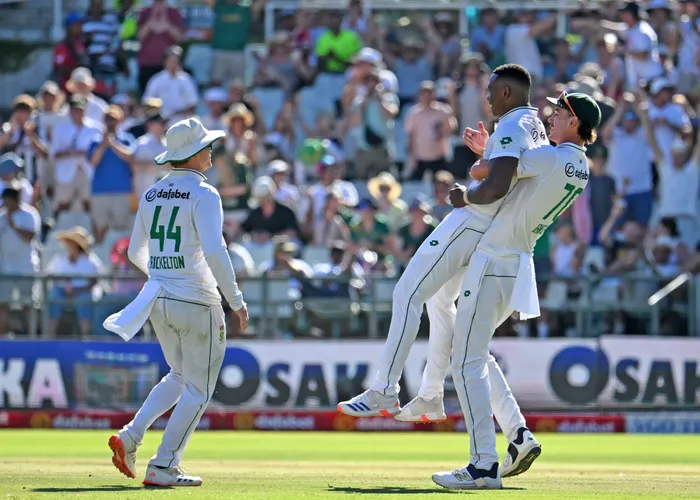
Within minutes of going on sale, the Newlands New Year’s Test was slapped with a "sold out" sign, leaving thousands of loyal local fans without tickets to watch Proteas stars such as Kagiso Rabada taking on England.
Image: Backpagepix
The Newlands New Year’s Test match is not merely an event on the South African sporting calendar; it is a sacred institution.
For generations, the sight of the sun rising over Table Mountain, illuminating the historic oaks and the unique festival atmosphere during the Cape Town holiday period, has represented the pinnacle of the domestic cricket season.
It is where families gather, where memories are forged, and where the soul of South African cricket resides. Yet, ahead of the highly anticipated clash against England, that soul feels as though it has been packaged, priced, and sold to the highest bidder.
The announcement that the fixture is entirely sold out should, under normal circumstances, be a cause for celebration. Instead, it has left local cricket enthusiasts with a profound sense of abandonment.
Tickets for the Test match went on sale on Monday at 9.30am and within a few minutes the sold-out signs went up — leaving thousands of disgruntled local cricket fans completely stranded.
Reports suggest that Cricket South Africa (CSA) may have systematically funnelled the vast majority of the stadium’s capacity directly to international tour operators and travelling England supporters. Nothing has been confirmed as yet, but it appears that CSA chased the British pound and potentially selling these tickets at inflated prices to those overseas fans.
While the financial injection of the "Barmy Army" and foreign currency is undeniably lucrative for local tourism and CSA’s perennially strained coffers, it comes at a devastating spiritual cost for the cricket-loving South African.
When a national federation prioritises corporate greed and short-term financial windfalls, it enters a dangerous ethical deficit. Local fans, who haven’t seen their World Test Championship-holding Proteas on home soil since January 2025 because of the SA20 league, have been told in no uncertain terms that their loyalty is worth less than the British pound.
The domestic summer has already been hollowed out to accommodate lucrative short-form leagues and commercial broadcast windows, reducing the ultimate format of the game to a seasonal novelty. Test cricket requires continuity and a deep connection between the team and its community.
By playing so few matches and then locking locals out of the showpiece event of the summer, CSA is actively severing that umbilical cord.
There is already a worrying trend at domestic level, where even semi-finals and finals fail to generate interest because nobody seems to care to market fixtures outside of the SA20. It already feels as though the local game is playing second fiddle to a franchise league that has been filling stadiums on the back of well-organised marketing strategies.
How are the next generation of fast bowlers and top-order batters supposed to fall in love with the longest format when they cannot see their heroes live, or when those heroes only wear white clothing on home soil once every 12 months?
The administrative narrative that Test cricket is an unsustainable financial burden becomes a self-fulfilling prophecy when the board refuses to market it properly to its own people.
CSA is currently putting short-term financial survival ahead of long-term sporting heritage. Securing the bag from travelling English fans might balance the ledger for this quarter, but it bankrupts the culture of the sport.
The New Year’s Test belongs to the kids from Langa, the club cricketers from Milnerton, and the families from Rondebosch. To strip them of their annual pilgrimage in the name of corporate profiteering is a betrayal that will resonate long after the final ball is bowled.