

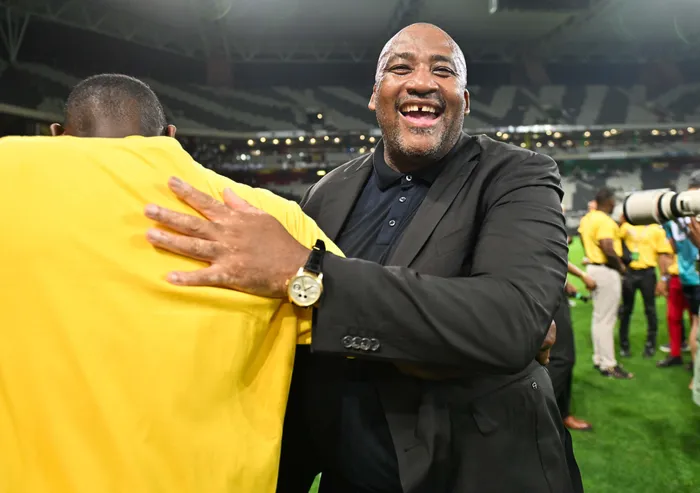
From AFCON 2028 to LIV Golf and F1, South Africa is back in the business of hosting the world. Minister Gayton McKenzie has outlines a bold new vision for regional sports tourism. Photo: Backpagepix
Image: Backpagepix
Minister of Sports, Arts and Culture Gayton McKenzie might have chosen his words carefully, but the message was straightforward: South Africa wants back into the business of hosting major sport, and the Africa Cup of Nations is firmly on the table.
With CAF confirming that AFCON will be staged every four years from 2028, the calendar has opened up in a way that suits ambitious bidders. The 2027 tournament, to be hosted by Uganda, Kenya and Tanzania, remains unchanged.
The following edition, originally earmarked for 2029, has been brought forward to 2028, with the next competition set for 2032. It is that 2028 window that South Africa is now targeting.
McKenzie confirmed on Thursday at a LIV Golf South Africa event at Steyn City that the country would submit its intention to bid before the CAF deadline, adding that the process is already drawing interest from neighbouring states. Lesotho, Botswana and Namibia have all indicated a willingness to be involved.
“South Africa can do it alone but we feel that, let’s take our neighbours with us,” said McKenzie.
The preference is for a Southern African bid, one that spreads both the responsibility and the benefit across the region. It is a pragmatic approach. CAF has increasingly shown openness to co-hosted tournaments, particularly where infrastructure, travel and costs can be shared. For South Africa, it also reduces pressure on the state while reinforcing regional cooperation—something that plays well politically and administratively.
AFCON is not being viewed in isolation. McKenzie has repeatedly spoken about a wider effort to attract global sporting events back to the country.
LIV Golf is already confirmed for a March tournament at Steyn City, while talks continue around a Formula One race and even a bid to host the 2036 Olympic Games. The country will also host the 2027 Cricket World Cup.
“The opportunities may have dried up in the past,” he said, “but that well is full again with the Government of National Unity.”
That comment hints at one of the central challenges South Africa faces: credibility. The country has hosted major events successfully before, most notably the 1996 AFCON, the 2010 FIFA World Cup and the 2013 AFCON. However, recent years have been quieter, marked by missed bids and questions around governance, infrastructure maintenance and financial capacity. Any AFCON bid will be judged against that backdrop.
Still, South Africa remains an attractive option on paper. Stadiums exist, transport networks are established and the commercial market is strong.
A regional bid could further strengthen the proposal by offering CAF a broader footprint and shared investment. There is also a softer argument at play. McKenzie framed hosting rights as an opportunity to showcase the country.
“We are the most beautiful country in the world and the world should definitely see it now,” he said.
It is a familiar pitch, but one that aligns sport with tourism and economic exposure.
For now, South Africa’s move is procedural rather than definitive. Declaring an intention to bid is only the first step in a competitive process. But it does signal a renewed willingness to engage, plan and collaborate, which may count for as much as nostalgia when CAF eventually makes its decision.