

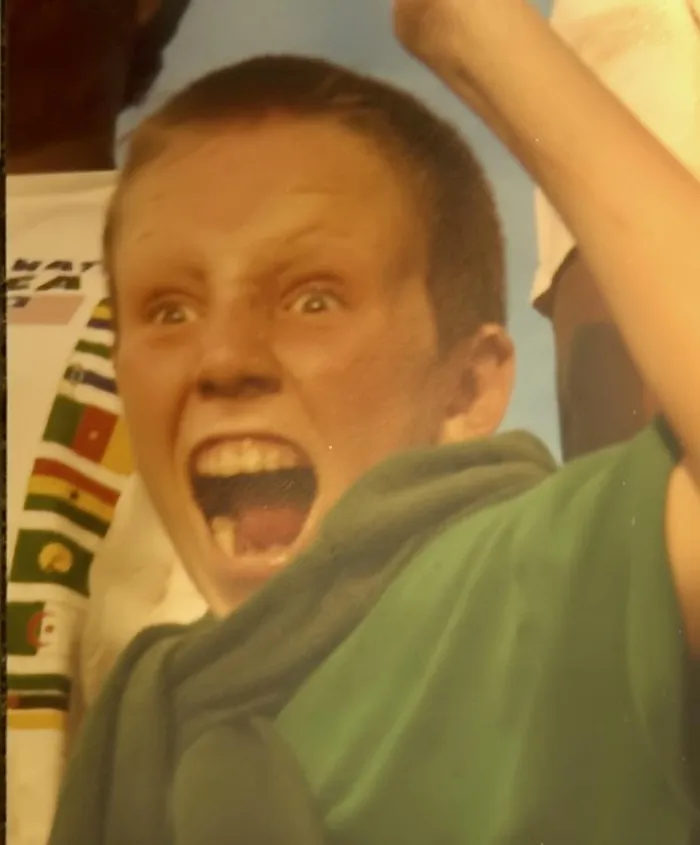
A 10-year-old’s vivid memory of Bafana Bafana’s 1996 Afcon victory highlights a nation united in celebration, marked by Mark Williams’ goals, Mandela’s iconic trophy presentation, and the overwhelming sense of pride and belonging. Picture: Michael Sherman/IOL
Image: Michael Sherman/IOL
February 3, 1996 remains one of the most significant days in South African football history — and one I experienced firsthand as a wide-eyed 10-year-old at the Africa Cup of Nations (Afcon) final at FNB Stadium.
The day had finally dawned.
I burst out of bed that Saturday morning, a bundle of nerves, knowing there were just hours to go before my older brother and cousin would head down the road to watch the Africa Cup of Nations final between Bafana Bafana and Tunsia.
That day was 30 years ago — February 3, 1996.
I almost forgot to wish my mom happy birthday.
I quickly forgave myself. What 10-year-old, sports-mad boy wouldn’t?
It was Afcon final day.
The names of Bafana stars rolled effortlessly off my tongue — Arendse, De Sa, Fish, 'Shoes', Tovey, Williams, Radebe — repeated to anyone who would listen, whether they cared or not.
At the time, we lived in Mondeor, in southern Johannesburg — less than five minutes from Soweto. Even closer stood the imposing FNB Stadium, still known to many as Soccer City.
I’d already attended one of Bafana Bafana’s earlier matches in the tournament: the opening game against Cameroon, a famous 3-0 win. It was my first time watching South Africa’s national football team live.
A rugby die-hard until then, I fell in love with football that day.
By the time the final arrived, anticipation across the country had turned into expectation. The Springboks had won the Rugby World Cup in 1995 — why couldn’t Bafana lift Afcon a year later? At least, that’s how it made sense to me.
Eventually, it was time to drive to the stadium in our old, battered Mini — my 22-year-old brother, 13-year-old cousin, and I crammed inside. My brother deserves credit for indoctrinating me in rugby, football, and cricket.
Whenever I didn’t know a player or a rule, he’d explain it in painstaking detail — until my attention inevitably drifted. We parked on the side of the road not far from the stadium, leaving us with about a kilometre walk to the gates.
What greeted us felt less like an organised sporting event and more like a mass protest. Thousands surged towards security checkpoints. This was long before digital scanners — every ticket was manually checked to ensure it wasn’t fake. After about an hour in the crush, we were in.
It was a different era. Getting to the stadium early wasn’t about soaking up the atmosphere — it was about finding somewhere — anywhere — you could actually see the game. Nobody sat in their allocated seats.
Despite arriving hours early, there was nowhere with a clear view.
As my brother, Greg Sherman, later recalled:
“We all had tickets, but guards were taking bribes to let in between 10,000 and 20,000 extra people. The aisles and stairways were packed like sardines. It could easily have ended like Hillsborough if there had been a crowd surge.”
In desperation, we rolled a concrete dustbin up a steep slope at the back of the stands. My brother and cousin stood on it, peering over the final row of spectators.
I was too short — but a kind stranger offered me a seat on his lap. From there, I watched the entire match in relative comfort, while my brother and cousin stood for the full 90 minutes.
At half-time came the inevitable toilet break — or attempt at one. The restrooms were overflowing, and gravity took over. The stadium’s unusual slope meant urine pooled at the bottom, with every male contributor adding to it.
Had camera phones existed back then, the footage would have gone viral in minutes.
How that old stadium met safety standards for so many years remains a mystery.
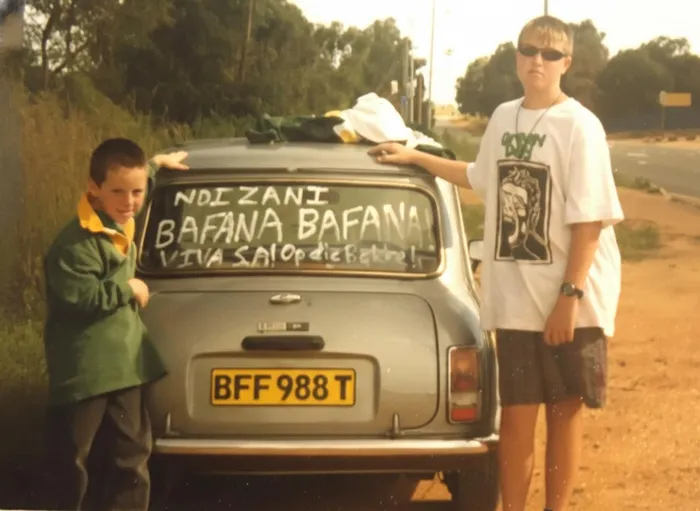
Our broken-down Mini on the way home after the 1996 Africa Cup of Nations final. Picture: Michael Sherman/IOL
Image: Michael Sherman/IOL
The match itself is now a blur, but one thing is crystal clear: Mark Williams’ two goals. Each one sent the crowd into a frenzy I’ve rarely experienced since.
South Africa beat Tunisia 2-0.
The trophy presentation was the crowning moment. I remember the roar as President Nelson Mandela walked onto the pitch — still one of the first politicians to share openly in sporting celebrations.
The chants of “Madiba! Madiba!” echoed around the stadium as he lifted the trophy alongside captain Neil Tovey. Even at 10 years old, I felt something profound — a sense of unity and belonging that transcended football.
That feeling followed me all the way home — even when our beaten-up Mini broke down halfway.
It didn’t matter.
In my mind, Bafana Bafana were champions of the world, and South Africa was the greatest country on the planet. I can’t even remember how we eventually got home — but everything that led up to that moment remains forever etched in my memory.