

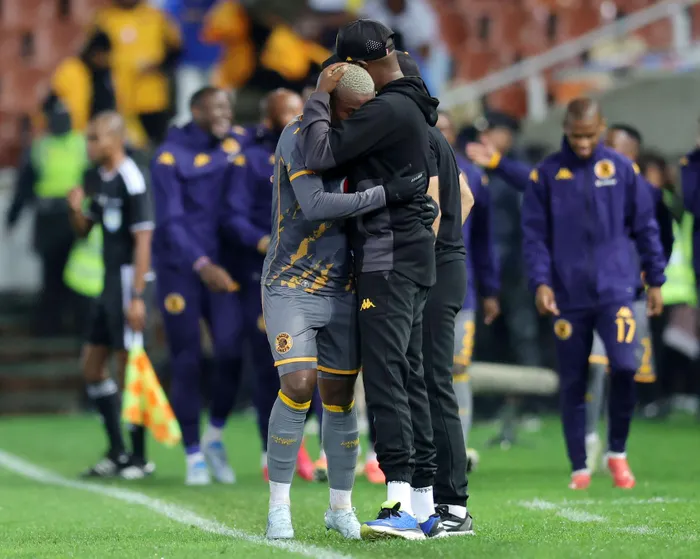
Kaizer Chiefs are back in business with five wins on the bounce. From a disciplined double pivot to smarter fullback play, the Amakhosi have finally found the structural balance they’ve been craving. Photo: Backpagepix
Image: Backpagepix
Kaizer Chiefs’ recent upturn in form hasn’t come from a dramatic tactical revolution, but rather a series of subtle, disciplined adjustments that have restored structure and balance to a side that looked vulnerable just weeks ago.
Amakhosi brushed aside Magesi FC on Wednesday to make it five wins on the trot in the Betway Premiership.The most significant change has been the team’s improved compactness between the lines.
During their poor run, Chiefs were regularly stretched, with the midfield pushing too high and leaving large spaces in front of the back four. Opponents were able to exploit those gaps easily, particularly in transition this was most evident against Orlando Pirates in the Soweto Derby.
That issue has now been addressed, with the team holding a far more controlled mid-to-low block that limits central penetration and forces play wide. A key factor in this stabilisation has been the adjustment in the double pivot, particularly with the partner of Lebohang Maboe and Siphesihle Ndlovu.
Earlier in the season, the Naturena based club struggled for a solid partnership with the likes of Thabo Cele, Ox Mthethwa, George Matlou and Nkosingiphile Ngcobo all getting a chance, leaving the defence exposed.
Now, the roles are far more defined. One midfielder (usually Ndlovu) holds position while the other presses or steps into space, ensuring there is always cover in front of the centre-backs.
It is a simple change, but one that has significantly reduced the chaos in defensive transitions.
The fullback structure has also been refined. Chiefs previously struggled with both fullbacks struggling with availability but as Thabiso Monyane and Bradley Cross become more consistent, that risk has now been managed more carefully.
One fullback tends to advance while the other stays tucked in or more conservative, giving the team better rest defence and improved balance when possession is lost. In possession, there has been a noticeable shift towards more purposeful progression.
Instead of recycling the ball endlessly in midfield, Chiefs are now more willing to play vertical passes earlier, particularly into the half-spaces and forward line where Glody Lilepo and Mduduzi Shabalala come alive.
This has reduced predictability and allowed them to break opposition lines more effectively, even without dominating possession for long spells.
Another important development has been the coordination of the press.
The front line is no longer pressing in isolation. Instead, Flavio Silva and wide players are triggering presses together, which has improved ball recoveries in advanced areas.
That synchronisation has given Chiefs more opportunities to attack in transition, an area where they have looked far more dangerous recently.
Perhaps just as important as the tactical tweaks is the improved game management. In previous matches, Chiefs often lost control after taking the lead, chasing games in an unbalanced way.
Now, there is more control in those phases, with slower tempo, better spacing, and reduced risk-taking when ahead which speaks to the work of co-coaches Cedric Kaze and Khalil Ben-Youssef.
Ultimately, the turnaround is less about reinventing the system and more about restoring order within it. With better spacing, clearer midfield roles, controlled fullback aggression, and sharper attacking intent, Chiefs have rediscovered stability—and with it, results have started to follow.