

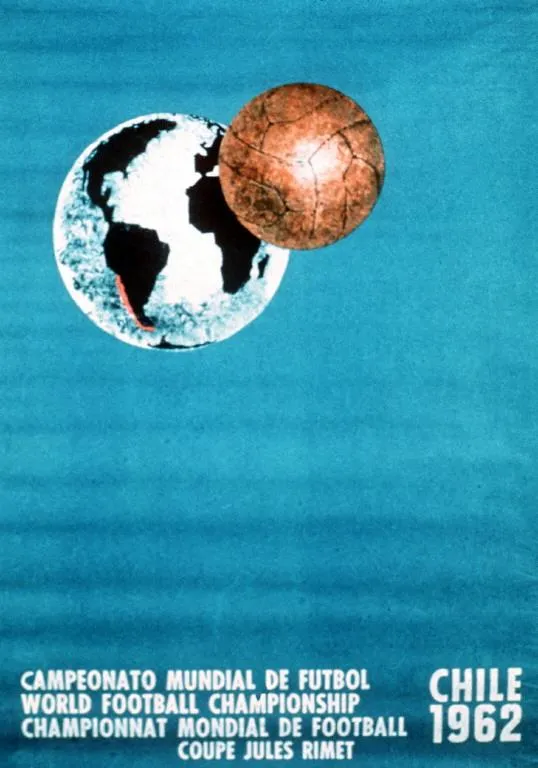
A stray dog, police interventions, and a 9.6 magnitude earthquake: The 1962 World Cup in Chile was as chaotic off the pitch as it was violent on it. Photo: AFP
Image: AFP
Chile were awarded the hosting rights after South America vehemently insisted that after two European hosts, the tournament had to return to their continent, lest they boycott the competition (as in 1938).
Remote Chile smootched their way to the hosting rights, insisting they could “host the tournament tomorrow” if need be. The Fifa congress agreed, voting for Chile over the much more logistically developed Argentina. What followed was European patronising of the hosts (what’s new?) and arguably the most violent World Cup to ever be hosted.
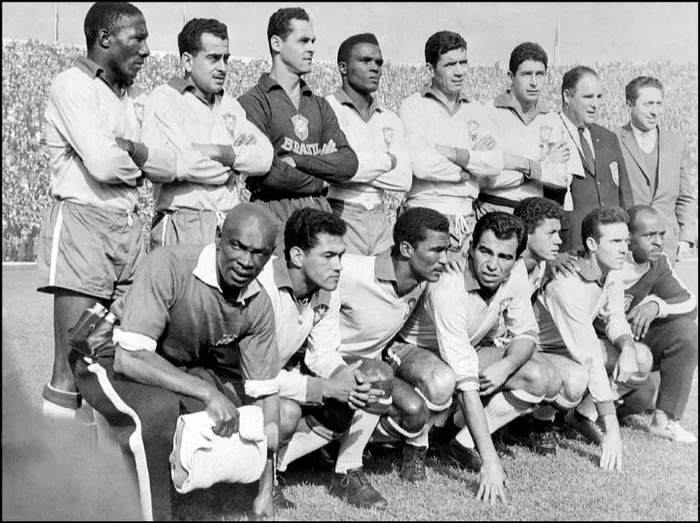
The Brazil team that defended their Fifa World Cup title at the Fifa World Cup 1962 in Chile. Photo: AFP
Image: AFP
Europe: Bulgaria, Czechoslovakia, England, Hungary, Italy, Soviet Union, Spain, Switzerland, West Germany, Yugoslavia
North America: Mexico
South America: Argentina, Brazil, Chile, Colombia, Uruguay
Days before the kick-off of the tournament, the largest recorded earthquake – the Valdivia earthquake – rocked the nation. It damaged several of the tournament’s stadiums, forcing Chile to abandon a handful of venues. The tournament was, therefore, played across four stadiums without the continued support of the government at the time, who concentrated their efforts on earthquake relief.
As in 1954, 16 teams were split into four groups with Brazil, England, Hungary and Uruguay seeded. Two points were awarded for a win and one point for a draw.
For the first time in the tournament’s history, goal difference was used to separate teams. Argentina became the first team to be eliminated from the World Cup on that rule after finishing third behind England due to scoring one less goal.
The World Cup in Chile was marked by violence on and off the pitch. Players were ruthless and reckless in their play, and scuffles were not uncommon. The most infamous match was the Battle of Santiago between Chile and Italy.
Fights broke out on several occasions between the players during that encounter.
The tension was particularly exacerbated by the Italian media who wrote: "Chile is a small, proud and poor country: it has agreed to organise this World Cup in the same way as Mussolini agreed to send our air force to bomb London (they didn't arrive). The capital city has 700 hotel beds. Entire neighbourhoods are given over to open prostitution. This country and its people are proudly miserable and backwards.”
The media inflamed the anti-Chilean sentiment, and coupled with the earlier disaster, the tournament was played under an intimidating, toxic atmosphere.
Although the Battle of Santiago was not an outlier regarding the saw the on-pitch violence, it is often remembered as the worst. The first foul was committed in the first 35 seconds of the match, with Italy's Giorgio Ferrini ordered off the field.
He refused and had to be dragged off the pitch by police. Scuffles ensued throughout the match, with Humberto Maschio's nose broken after a punch in the face. Retaliation was the name of the game, with police having to intervene a further three times to break up fights.
Unsurprisingly, the Azzurri had to be escorted off the pitch after their 2-0 loss. The referee — Ken Aston — of the Battle of Santiago, meanwhile, would go onto to develop the yellow and red card system still employed today.
The Daily Express wrote at the time of the matches: "The tournament shows every sign of developing into a violent bloodbath. Reports read like battlefront despatches."
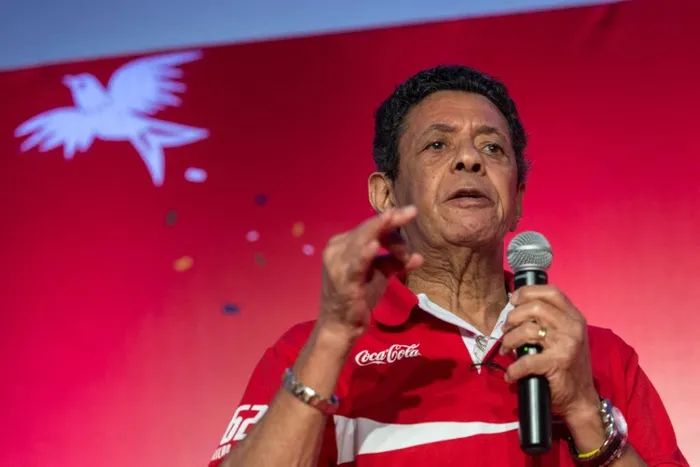
Brazil legend Amarildo scored eight goals during the 1962 Fifa World Cup. Photo: AFP
Image: AFP
Quarter-finals: Soviet Union 1, Chile 2; Brazil 3, England 1; West Germany 0, Yugoslavia 0; Hungary 0, Czechoslovakia 1
Semi-finals: Brazil 4, Chile 2; Yugoslavia 1, Czechoslovakia 3
Hosts Chile won the third-place play-off 1-0, beating Yugoslavia.
Pelé, who had inspired Brazil to victory while leaving the rest of the world in awe four years earlier, played a limited role in the country’s campaign in Chile. He scored during their opening 2-0 victory over Mexico, but against Czechoslovakia, he limped off the field with a hamstring and groin injury.
In his absence, Amarildo and Garrincha drove the Brazilians to the final, where they faced Czechoslovakia. The former scored eight goals during the tournament, including a crucial goal in the final that secured a 3-1 win.
Brazil, along with Italy, remain the only nations that have won back-to-back titles at the event.
During the Brazil v England quarter-final, a stray dog invaded the Estadio Sausalito. The stray evaded all the players and match officials, finally yielding to a crawling Jimmy Greaves of England, only to urinate all over the forward’s shirt. Legend has it that Brazilian star Garrincha found the incident so hilarious that he adopted the stray and named it Bi for Bicampeonato (double winner).