

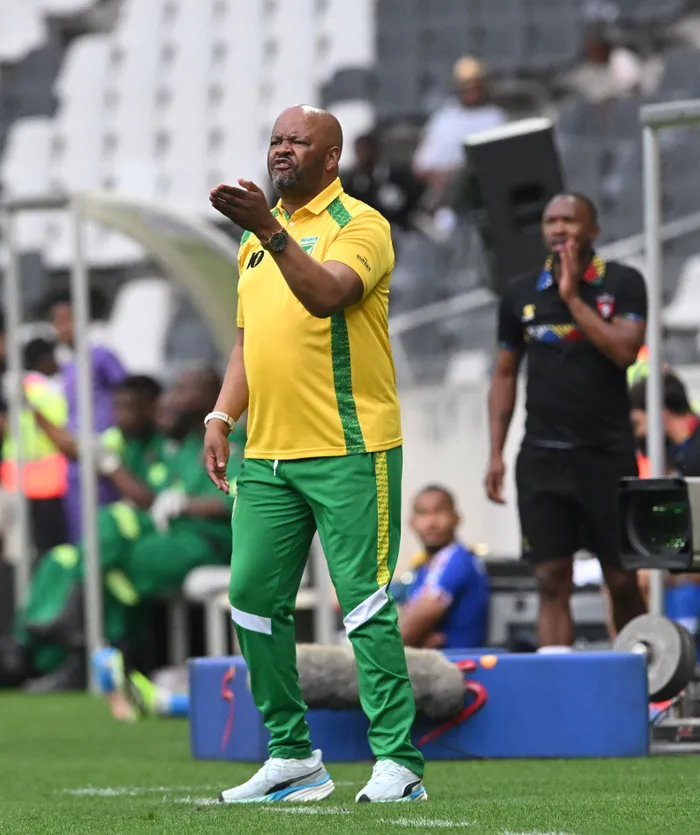
LAMONTVILLE Golden Arrows coach Manqoba Mngqithi remains confident in his young squad’s potential despite a FIFA transfer ban
Image: Backpagepix
LAMONTVILLE Golden Arrows enter the second round of the Betway Premiership carrying two contrasting identities.
On one hand, Abafana Bes’thende remain one of the most entertaining teams in the division. On the other, they are tethered by inconsistency and a transfer ban that removes the comfort of quick fixes.
Sitting 10th on the table ahead of the return of domestic football following the AFCON break, Arrows are neither drifting nor climbing. They are paused — and that pause places unusual weight on the shoulders of their coach, Manqoba Mngqithi.
This is where his value will be measured most clearly.
A transfer ban forces honesty. It strips away the illusion that solutions can be purchased in January and places the responsibility squarely on coaching, structure and belief.
For Arrows, the second round is not about reshaping the squad; it is about reshaping consistency. Mngqithi understands this terrain better than most.
He has built competitive teams before under constraint, sides that survived not on star power but on clarity of roles and tactical discipline.
At Arrows, the blueprint has already been visible in flashes — high-tempo football, fearless wing play and a willingness to take risks even against stronger opponents.The problem has never been entertainment. It has been control.
Inconsistency has left Arrows five points off the top eight, a gap that is neither alarming nor comfortable. It is the kind of margin that can vanish quickly with momentum or widen just as fast with hesitation.
This is where Mngqithi’s experience becomes central.
With no new signings to lean on, rotation, in-game management and emotional regulation become decisive tools. Players must be trusted through dips in form.
Young legs must be protected, not exposed. Matches must be managed with consequence rather than expression alone.
The transfer ban, paradoxically, could sharpen Arrows.
There is a freedom that comes when expectations are stripped back to fundamentals. Training becomes competitive because positions cannot be filled externally.
Accountability grows because excuses shrink. Every player knows the coach has no alternative version waiting in the wings. Mngqithi’s task is to turn that reality into an advantage.
Arrows return to action against Kaizer Chiefs in Johannesburg on January 20, a fixture that will offer an early indicator rather than a verdict.
How Arrows approach that match — brave but measured, expressive but structured — will hint at whether the second round will be progressive or reactive.
Chiefs will dominate territory. Arrows must dominate moments, That balance is coaching.
The second round will not reward chaos. It will reward teams that understand when to press and when to pause, when to chase games and when to protect them. For Arrows, those margins will define whether 10th place becomes a stepping stone or a ceiling.
Mngqithi is not being asked to perform miracles. He is being asked to stabilise rhythm.
With a transfer ban in place, he must extract more from what already exists — more consistency, more discipline, more belief that entertaining football can translate into points, not just praise.
In a league where many coaches will look to January reinforcements for salvation, Mngqithi’s challenge is different.He must prove that coaching still matters.