

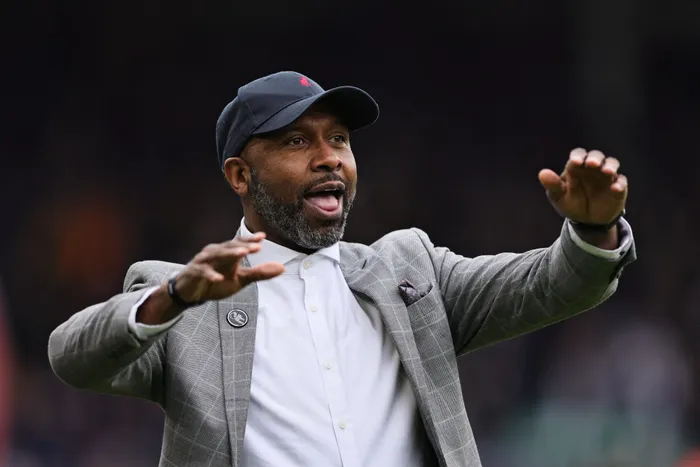
Former Bafana Bafana captain Lucas Radebe is being backed by reformers to challenge Danny Jordaan for the SAFA presidency this September, though constitutional "experience" rules remain a significant barrier to his candidacy. Photo: Backpagepix
Image: AFP
As South Africa’s football community gears up for a monumental decision at the SAFA Elective Congress in September, attention is increasingly focusing on the potential candidacy of Lucas Radebe, the revered former Bafana Bafana captain.
Everything at this stage suggests that current SAFA president Danny Jordaan will seek to extend his tenure, but the road ahead is laden with both uncertainty and immense possibilities. The upcoming elections are not just a formality; they represent a critical juncture for the organisation, particularly given Jordaan’s tumultuous leadership, which has been marked by allegations of fraud and misgovernance.
Despite being embroiled in controversy and facing charges of financial misconduct, Jordaan has vowed to run for re-election, insisting he will continue to lead the organisation as long as its members desire.
Radebe, however, has emerged as a prominent figure in discussions about the future of SAFA’s leadership. Many former players and advocates of change have rallied behind him, drawing parallels to Samuel Eto’o — the Cameroonian hero who was re-elected as his nation's football president in late 2025.
Despite his legendary status, Radebe faces a significant hurdle: the association’s constitution requires candidates to possess at least 10 years of experience within its structures, a criterion he does not currently meet.
This requirement has sparked calls for constitutional reform to allow qualified individuals with significant football experience, but lacking bureaucratic credentials, to take the helm. Supporters point to Eto’o’s rise as a source of inspiration; few thought he stood a chance when he first announced his candidacy, yet he fundamentally transformed perceptions of what it means to lead African football.
The growing dissatisfaction with Jordaan highlights the weight of Radebe’s potential candidacy. The conversation surrounding "Rhoo's" aspirations underscores a profound clash within South African football: on one side is Radebe, embodying the voice of reform and football-centric leadership; on the other is Jordaan, a seasoned administrator whose influence and political experience have allowed him to dominate the SAFA landscape since 2013.
Calls for an administration that can rejuvenate South African football are becoming louder, especially as legal disputes regarding Jordaan’s tenure continue to survive multiple bids to unseat him.