

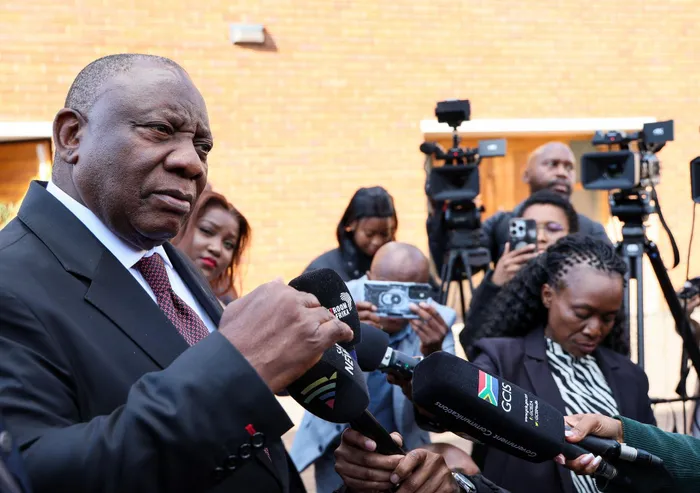
The government had allocated R700 million to fund the dialogue. The amount shocked many and sparked fierce debate.
Image: Jairus Mmutle / GCIS
What was meant to be a turning point for President Cyril Ramaphosa’s image has become a quiet failure. The national dialogue he launched earlier this year has lost momentum, raising serious questions about its future and purpose.
The dialogue was introduced as a platform for all South Africans to come together and talk openly about the country’s challenges. It was meant to bring unity, build trust, and find solutions. But today, the conversation has stalled — and barely anyone is talking.
At the centre of the problem is money. The government allocated R700 million to fund the dialogue. The amount shocked many and sparked fierce debate. Critics said it was far too much, especially given the country’s struggling economy and urgent service delivery issues.
As the funding controversy grew, several major organisations pulled out. One of the most notable exits came from former president Thabo Mbeki. He had supported the idea in the beginning, but later criticised the way it was rolled out. He reportedly called the launch event at the University of South Africa a “misnomer” — meaning it failed to match its promises.
Without strong support, the national dialogue has lost the wide range of voices it was supposed to include. Instead of leaders from all sectors of society, it is now mostly attended by people from the creative industry and a few civil society groups.
Observers say the dialogue is no longer living up to its name. It was supposed to be about working together across divisions. But instead, it has become a symbol of how hard it is to bring people together in the current political climate.
South Africa is facing many serious problems. The economy is flat. Service delivery is failing in many areas. And political tensions are rising ahead of the 2026 local elections. In this context, a true national conversation is more needed than ever. But critics say this one has lost direction and now looks more like a public relations exercise than real engagement.
President Ramaphosa has not spoken publicly about the stalled process in recent weeks. This silence is adding to the sense that the dialogue has quietly been abandoned.
One participant from civil society put it simply: “It is a dialogue, but nobody is talking.”
The project was meant to help rebuild trust in leadership and show that the government could still listen and respond. Instead, it has become a reminder of how difficult it is to build unity in a divided country.
For now, the national dialogue continues in name only. The grand vision of open, honest discussion involving all sectors of society has faded. What remains is a small group of people trying to keep the idea alive without the support it needs.