Forget me not says Adderley Street flower sellers
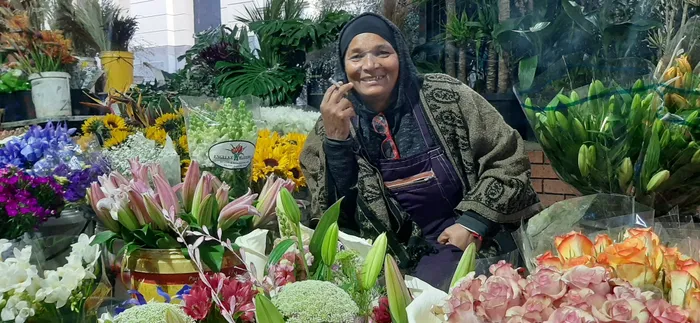
Diela Gamildien also known as aunty Diela on TikTok, has spoken out about her love for flowers and her dismay at a drop in business. Picture: Tracy-Lynn Ruiters
Cape Town flower market is an institution and a major attraction. But the once blooming business for vendors is wilting – right along with unsold flowers.
The Trafalgar Place flower market was once a busy hub, even in the heart of winter, but business is waning and traders are left with little money to sustain their businesses and support their families.
For more than 150 years, the space located just outside the Golden Acre has been a draw card for tourists and locals – especially on special occasions.
But now the flower sellers are raising concerns that they used to make R2 000 a day, but now were lucky to make R200 while trying to turn a profit off the R6 000 worth of flowers per week.
Diela Gamildien, 54, said she was a fourth generation flower seller at the market.
“My father’s mother, and my mother’s mother stood here and sold flowers, later my mother took over and when I turned 16, I joined. I remember when I was in primary school how I had to get off here.
“I also remember how my brother Abduragmaan Williams, walked the streets selling the flowers.
“This flower market is the reason me and my eight siblings could have a roof over our heads, its all I know. I live, breathe and eat because of this place.” she said.
Gamildien, who is well known for her TikTok videos, spoke about her struggles before and after the pandemic.
“That was the most difficult time of our lives, it was a time when we had to go and ask our family and friends for bread, the government didn't come and check up on us, yes they checked up on (people) in the streets, but not us.

“Up until today they still (haven’t) checked up on us, it feels like an extension of Covid here on the market,” she said.
Gamildien believed if the City and government regularly watered one of their most prized possessions, it would grow.
“If I get a sale, I consider myself lucky, because you don't even make enough to cover your diesel. If it wasn't for my private clients that I can WhatsApp, I don't know where I would be. During lockdown people would message me for private sales for funerals and that's when I also made some money, but now, nothing.
“All that's needed is that they include us, include us in your strategic plans, we are part of the Cape's traditions and should be part of its future,” she said.
Glenda Bowman, who has fond memories of standing on the market since the age of six, said vendors have seen dwindling support from authorities over the years.
“At the moment we are standing on a loss of 85%, you can imagine how much it affects us. This is how we put food on our families table, but we don’t get enough support.
“The support they say we’re going to get, with this and that programme, never materialises, it is just words, nothing more,” she said.
Bowman, however, believes that if the government invested in their business, it would mean growth in Cape Town’s economy.
“The first thing people ask when they visit Cape Town is to be taken to Table Mountain and the flower market, this should be enough for the government to put action to their words. I mean the business is already down, but we still try and we still grow, we can’t allow it to die with us,” she said.
The City’s Mayco member for Economic Growth James Vos, described the flower market as an institution that contributes to the social and economic economy of the City.
“Recently the City held an Informal Economy Summit with traders, trader organisations, small business and other industry role-players to engage them on challenges faced by the industry and discussed pertinent matters, such as the impact of the pandemic, a review of the Informal Trading By-law, and norms and standards for the provision of informal trading economic infrastructure and services, and how it relates to the informal sector.
“At the start of the pandemic, we motivated the council to implement a zero percent increase in trading tariffs for the (current) financial year, (which began) July 1. This is on top of the decision to extend the permit relief from the currently agreed date of July 1 to December 31,” said Vos.
During the summit held in June, Vos also told delegates that R53 million of the Economic Growth budget had been allocated towards providing a capital pipeline of projects.
“This pipeline is to provide well located, more dignified and accessible trading spaces, and system upgrades that will create a more streamlined approach to engagements between the City and traders that will ultimately make it easier to do business,” said Vos.